
The Forgotten WTC

An ode to those ungainly towers
You know, I had a much longer post queued up for today which had absolutely nothing to do with 9/11. To be honest, I don’t feel that I have much to add to the conversation surrounding the event. Yes, I lived in Brooklyn and worked in midtown at the time, but I think my experience was similar to many folks who weren’t directly impacted by the attacks. As I was leaving (late) for work that day I flipped on NY1 to check the weather and saw that a plane had crashed into One Word Trade, but assumed that it was a small craft that had veered tragically off course.
My main memory from that morning was biking over the Williamsburg bridge and seeing a bunch of people who’d climbed halfway up the protective fence in order to take pictures and video (I remember muttering “vultures” under my breath, although my older self can’t help but contemplate how many of them got a decent payday from their footage). The second plane had probably hit by then, but I was unaware of it until I got to work, at which point the magnitude of the incident became clear. I still recall being stuck in an elevator with a wiry little financial bro who was completely freaking out, repeatedly stabbing the “Lobby” button while yelling “We’re a prime target, man! A prime target!”
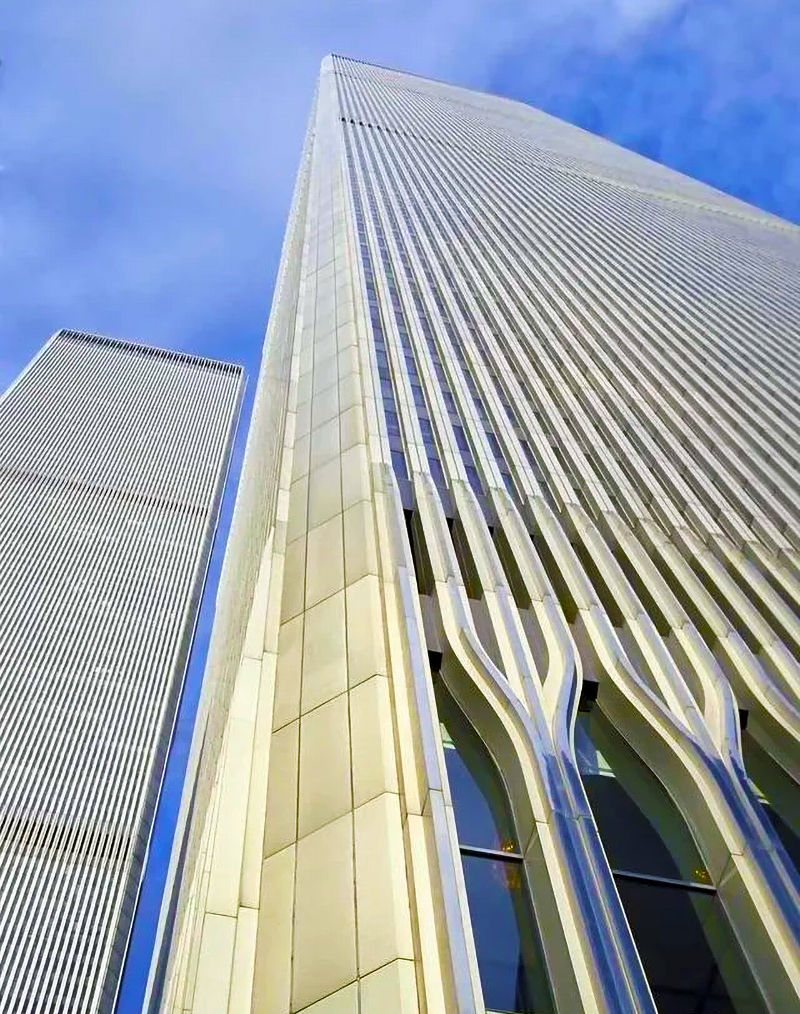
But something that tends to get glossed over in all of the “day of tragedy” coverage (and the thing that compelled me to scribble out this tribute) are the buildings themselves. Never all that beloved as an architectural landmark in their day, the Twin Towers were nevertheless an omnipresent part of Manhattan’s downtown skyline, and eventually earned a begrudging respect even from the haters due to their sheer size and distinctive silhouette. And once you got up close, you couldn’t help but notice the surprisingly delicate details, like the tulip-shaped branching columns that sprouted up from the base, evoking (somewhat ironically, obviously) the windows of a mosque minaret.
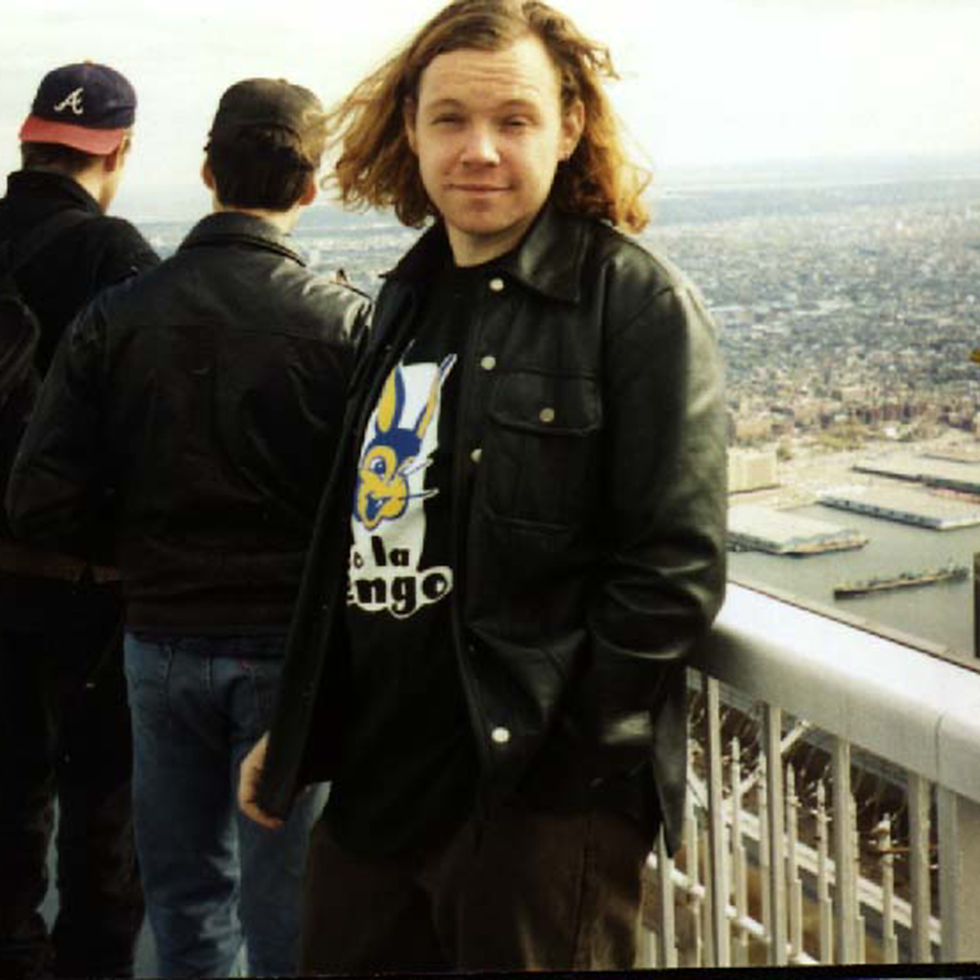
And the experience of visiting the towers themselves was always a rush (sometimes literally, as the wide-open plaza surrounding them turned into a gale-force wind machine on blustery days). Even though their main purpose was utilitarian (they were office towers, after all), both buildings were also huge tourist attractions, with Two World Trade featuring a spectacular open-air observation deck on the roof, and One World Trade housing the famous “Windows on the World” restaurant-slash-nightclub complex on the 107th floor.
I was lucky enough to visit both on numerous occasions, most notably when my dearly departed friend Andrew Johnston, a great writer and the lead film critic for Time Out New York at the time, invited me to accompany him to the 2000 New York Film Critics Circle awards, which he was hosting. The entire evening was exceptional, and enhanced greatly by the opulent surroundings and unrivaled view out the narrow windows. (Most memorable moment: being next in line to board one of the lightning-fast elevators behind Benicio del Toro, but being barred from entry by a stern minder, as apparently Benicio didn’t fancy sharing an enclosed space with riffraff like me.)
Another amazing feature of the WTC experience was the humbly named “Greatest Bar on Earth”, which was a vital part of the “Windows” experience. During the Swingers-inspired retro music craze of the late 90s/early 2000s the club hosted a regular series of swing and lounge-inspired acts like Voodoo Martini and Combustible Edison on its tiny stage. These events were super-cheap (the cover was usually around five bucks, if I remember correctly) and a massive amount of fun, even if the neo-swing revival seems painfully cringe in retrospect.

And so, on this quarter-century anniversary of the day it all came down, I’m choosing to sidestep the sadness (and subsequent refashioning of America into a right-wing surveillance state) and instead remember the Trade Towers as I knew them: a pair of awkward, unlovely obelisks that improbably housed a world of pure magic (at least if you had a few cocktails in you).


Comments