
On Pen Names

What's in a name? You'd be surprised.
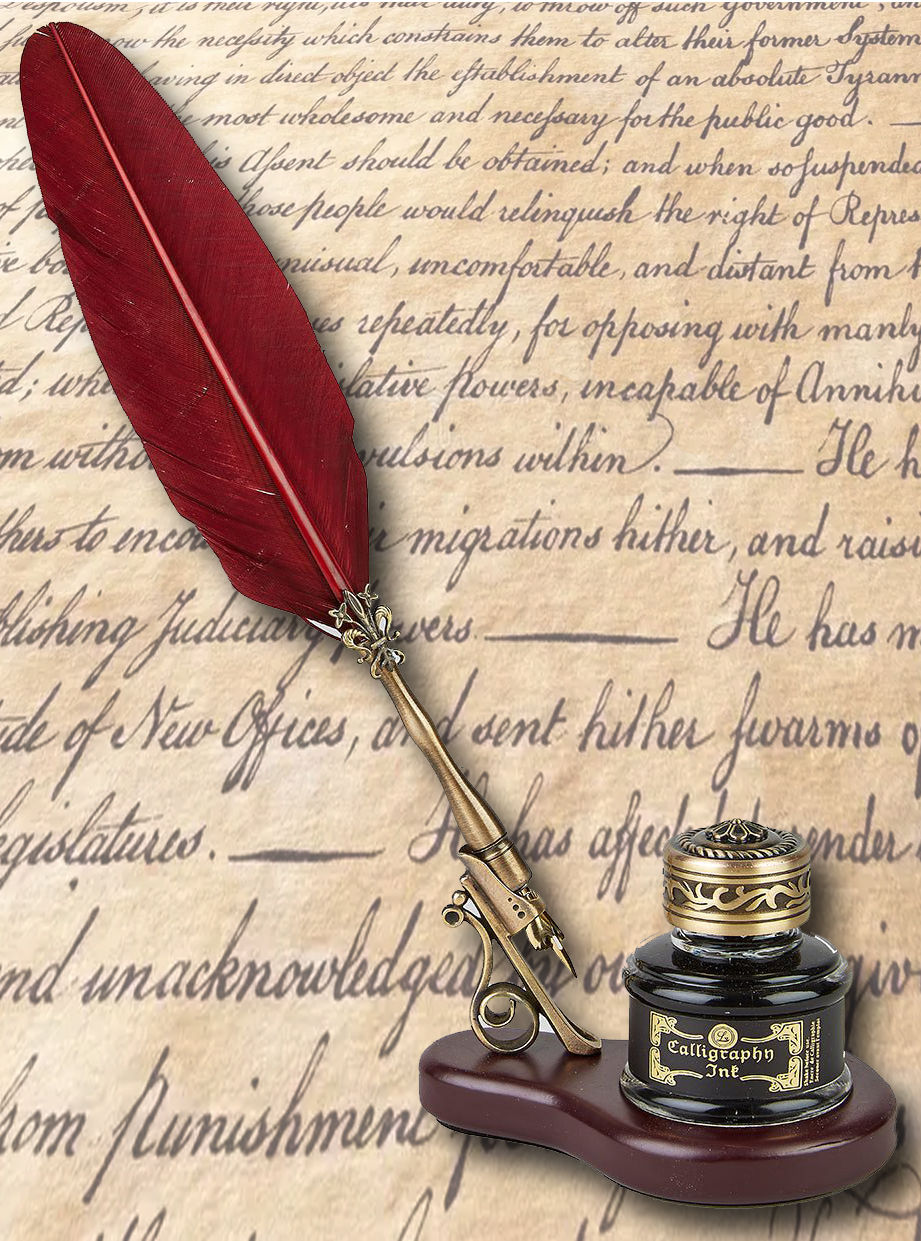
The act of publishing under a fake name in order to mask one’s true identity is a practice as old as writing itself. This reasons for this subterfuge varied widely, from a desire to appear more authoritative to a fear of political persecution. Early Greco-Roman alchemists, for instance, employed legendary names such as Cleopatra the Alchemist and Pseudo-Democritus in order to lend their works a patina of authority.
Conversely, many authors over the years have adopted literary alter egos to maintain anonymity, allowing them to write incendiary screeds without being targeted by the opposition or hauled in by the authorities. This famously was the case during the American Revolution, when a massive number of political tracts were published under a variety of pseudonyms. The most famous of these were “Common Sense”, which Thomas Paine employed for his famous pro-independence pamphlet, and “Publius”, the collective name used by Alexander Hamilton, James Madison, and John Jay to publish the 85 Federalist essays during the great American constitutional debate. But for my money the real winners were the hilarious sobriquets used by anonymous writers on both sides of the Federalist/Antifederalist divide, who submitted opinion pieces to newspapers under names like Mustard Grinder, Obadiah Spriggens, Old Square Toes, Thomas Noodle, and Wronghead.
But it was in the 19th century, when reading for entertainment truly took off, that the practice of adopting a pen name exploded, as writing fiction was still considered a fairly trashy profession at the time. By some estimates, by 1830 around 80% of novels were either published anonymously or under a nom de plume. (Interesting side note: nom de plume — literally, name of the feather quill — isn’t a true French phrase. It’s an English bastardization of the French expression nom de guerre, or “war name”, which describes an alias employed by a soldier or battlefield commander. Confusingly, the phrase “pen name” is actually a back-translation of nom de plume, which I guess the English forgot they invented in the first place.)
One driving force behind the growth of pseudonyms during this period was rampant sexism. Due to the fact that female authors weren’t taken very seriously by the (mostly male) critics, many women chose to publish under masculine-sounding names to avoid prejudice. The essayist and editor Mary Anne Evans, for example, released her fiction under the name George Eliot, while the Brontë sisters (Charlotte, Emily, and Anne) wrote under the pen names Currer, Ellis, and Acton Bell for most of their lives.
Other reasons for using a pen name included disguising an unsavory reputation (O. Henry, for instance, wrote his first stories while imprisoned for embezzlement) and simply wanting a cool-sounding name that seemed more appropriate for the material (which is why Samuel Langhorne Clemens adopted the catchier “Mark Twain”, a phrase Mississippi riverboat crewman purportedly shouted when reaching a depth of two fathoms — although it’s also been rumored that Clemens himself would shout this when entering his favorite bar, instructing the bartender to add two shots to his already sizable tab).
The final category of pseudonyms are the ones created to distance the author from their family name — for their own sake, or to protect their relatives from guilt by association. An example of the former is Voltaire, whose father famously disapproved of his son’s literary ambitions and tried to force him into a legal career. Instead his son wrote scandalous poetry (which got him jailed for a time in the Bastille) and published plays under an assumed name as a rebuke to his overbearing father.
The opposite was true of George Orwell, who adopted his pen name because he was afraid that his wealthy family would be scandalized by the life of poverty he described in his first book, Down and Out in Paris and London.

Which, perforce, brings us to my own pen name, which some readers may have already recognized as Orwell’s given name: Eric Arthur Blair. My reasons for choosing (some would say stealing) this name don’t cleanly match any of the categories I’ve listed so far. Although I did consider the feelings of my teenage son (who rolls his eyes whenever the subject of my writing comes up), and also how my normie coworkers might react to my (slightly) risqué fiction, neither of these concerns was determinative.
The real factor influencing my decision was a desire to signal a new focus and determination to create a body of work that was significantly different than what I’d done before. As someone who’d had a successful career as a journalist, but kept just missing the brass ring of traditional fiction publishing, I decided it was time to turn the page and try something completely different (with apologies to Monty Python).
To be clear, I didn’t know that I’d be using a pen name when I started writing my latest novel, Strangers’ Gate. But from the moment the idea came to me I knew that I was going to try to write it as a straightforward thriller — the sort of thing that you’d pick up in an airport bookstore when your flight got delayed. Of course, as I’m constitutionally incapable of decorum, the book ended up being filled with far too much sex and politics to pass as a standard thriller, but it still had the propulsive plot and unadorned writing style that typify the genre, and so I ultimately decided that it deserved a pithy author name to match.
I mulled it over for quite some time, considering and discarding a number of options, including “Nick Brace”, an oblique homage to Mark Twain (“brace” being an old hunters’ term for a pair of animals). But it was while researching famous pen names that I stumbled across Orwell’s birth name, and it immediately clicked — both because I’m a huge fan of the man’s work, and also because the near-future world of Strangers’ Gate was my attempt to present a mirror image of the bleak, dystopian society of 1984.
Of course, I’m nowhere near the master prose stylist or brilliant thinker that Orwell was, and so I’m well aware that drawing the comparison could strike some as the height of arrogance. But in the end I decided that Eric Blair was a common enough name that most people wouldn’t get the reference, and those who did would hopefully be more amused than offended. Plus it looked really good in block type on the book jacket, and so Eric Blair it was.
And that’s when I realized something about pen names that hadn’t occurred to me before. Adopting one is actually a very freeing exercise, especially when you already have a sizable body of work (both published and unpublished) under your own name. When I decided to go the indie author route, having that one level of remove made all the difference in the world. I was no longer selling myself, begging people to pay attention to me — I was marketing the consummate thriller writer Eric Blair, who was obviously a very suave fellow who knew exactly what he was doing.
It’s also nice to have a persona who writes a certain type of book, as it really helps clarify the creative process. As soon as I had the name, I immediately went through my catalog of plot ideas and considered which ones would make good “Eric Blair” books. In fact, it was then that I knew I’d made the correct decision, as I immediately realized that a fun San Francisco vampire idea I’d had years earlier would fit perfectly into the Strangers’ Gate universe, and would work splendidly as an unconnected prequel to that book.
Of course, I’m sure a psychologist would have a field day exploring the dissociative impulses that might drive a person to invent a completely different persona in order to overcome their fear of failure. But you know what? If it takes a self-created mental disorder in order for me to keep telling the stories that I want to tell, I’m fine with that. It sure beats the hell out of writer’s block (Eric Blair doesn’t have that, you see).


Comments