
I Killed Michael Hutchence

Never send a boy to do a fan's job
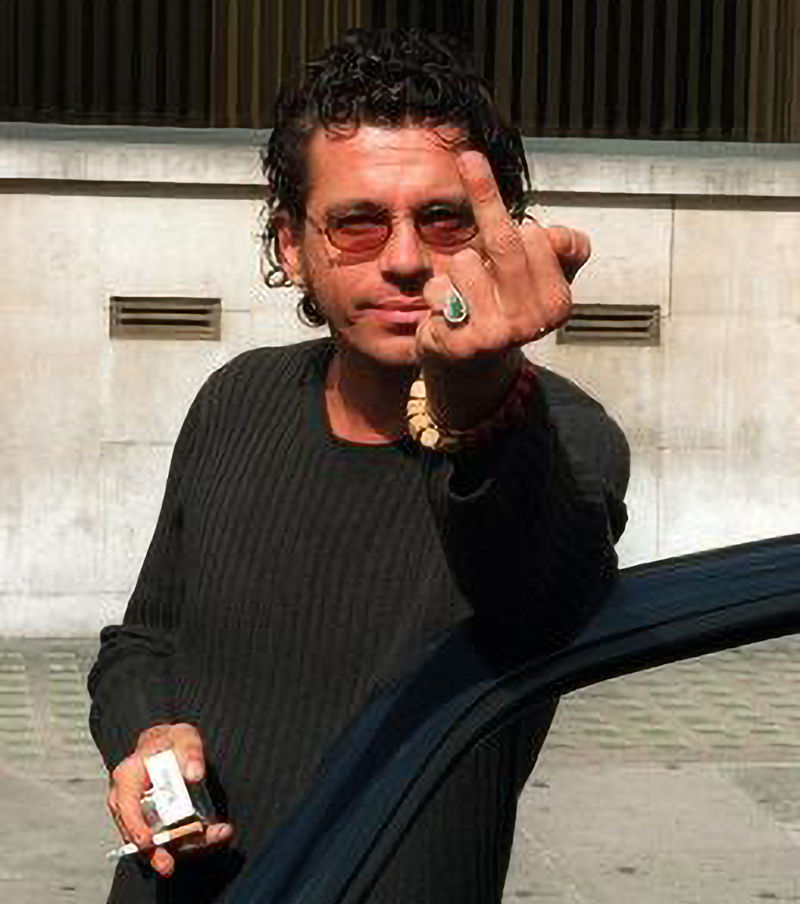
A quick clarification: I did not actually kill Michael Hutchence, the lead singer of INXS, and apologize profusely for the clickbaity headline. But since it’s early in my Substack journey, and my readership is slight, I’m letting it all hang out!
I’d probably feel worse about making light of Hutchence’s death if I was convinced that he intentionally committed suicide, but the evidence for that has never been all that persuasive to me. His partner at the time, TV host Paula Yates (who would later die of a drug overdose), consistently maintained that Hutchence was practicing auto-erotic asphyxiation when he died, and the manner in which he was found (on his knees, naked, with the belt around his neck attached to the hotel door-closing mechanism) does seem rather odd. The belt was broken when he was found, but Hutchence’s feet would’ve been on the floor when he affixed the belt to the flimsy door arm, less than a foot above his head, and he would’ve had to lower himself to make the belt taut. This seems like the behavior of someone who wasn’t strongly committed to meeting his maker — more like someone testing the boundaries to see how close he could get to the other side. (And yes, I know that he’d suffered a brain injury during an altercation with a taxi driver years earlier, and was prone to bouts of depression after that, so please don’t @ me in the comments.)
But really, this post is only tangentially about Michael and his untimely end, however that sad event played out. What it’s really about is my single most disastrous moment as a rock critic (and there were more than a few of those, believe me) — a cringe-inducing interview with INXS in a Gramercy Park hotel room during the promotional push for their 1997 would-be comeback album Elegantly Wasted.
Before we go over that debacle, however, I should paint a quick picture of how I got there. I’d moved to New York in the mid-90s to live a writer’s life. I’d recently scored an agent for my first novel (which never sold) and was temping around as a graphic designer while writing album reviews and short features for a number of small-but-awesome NYC alternative publications (Paper, Magnet, NET). In one of those strokes of serendipity that the young and naive take for granted, the incoming editor of a well-funded new CD-ROM magazine (yes, those existed) was friends with a zine publisher that I worked for, and just happened to read and enjoy one of my reviews. (If I remember correctly, it was a brutal takedown of David Lee Roth’s mediocre solo effort Your Filthy Little Mouth.)
Well, one thing led to another, and before I knew it I was the music editor of this exciting, madcap venture, and thrown into a world of celebrity interviews and nonstop open-bar record industry events that would define my life for the next decade. To say that I had imposter syndrome for most of this stretch would be a massive understatement. Because of the (many felt undeserved) attention that the shiny new CD-ROM format generated, I improbably ended up getting to interview many of my childhood heroes, including David Bowie, George Clinton, Iggy Pop, and Metallica, along with a wide array of indie stars like Pavement, Yo La Tengo, and Ben Folds.
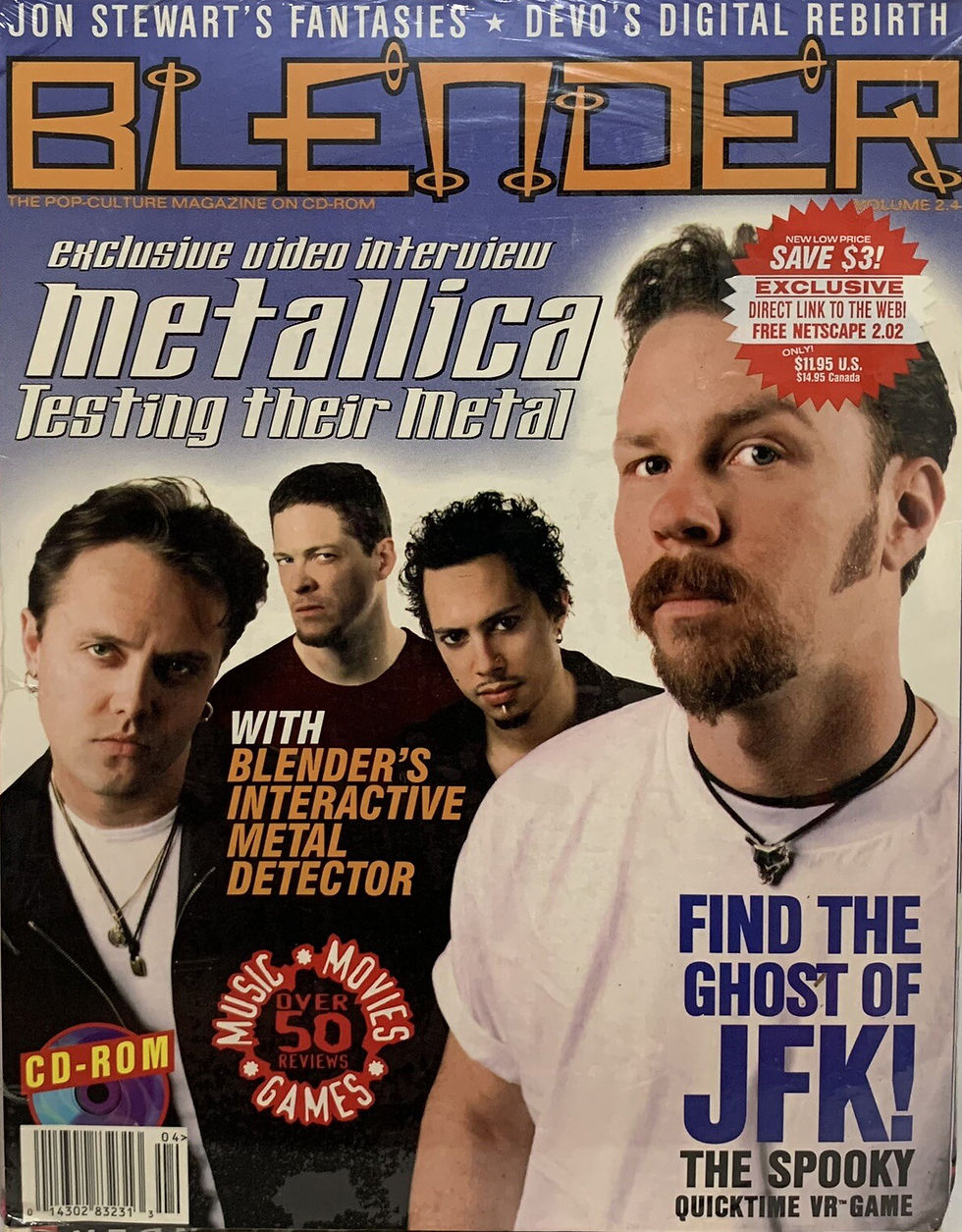
The late, pretty darn great Blender CD-ROM Magazine
Now, I’m not going to argue that the work we did was hugely influential, or even particularly groundbreaking, but I will say that — in those early days of the internet, when downloading a single image took an eternity — Blender’s combination of music, video, excellent writing and eye-catching design basically created Web 2.0 years before it was feasible online. (You can get a sense of the thing here, where founding member and lead programmer David Cherry has made all of the issues available for download, along with a link to a Mac simulator that can run them.)
The thing is, due to the fact that we had a limited budget (and didn’t need high resolution video, as space limitations meant that most clips featured in the magazine were highly compressed, 320x240 sludge), most times I’d just show up with a 90s-era Sony Handycam and a list of questions. If I had a cameraperson, that was a good day.
The thing I quickly learned is that either the interview subject was into it, or they weren’t. David Bowie, for instance, was completely on board, which absolutely made my life. He was in the middle of his hugely under-appreciated drum & bass phase, which produced his superb Earthling album, along with its (painfully still relevant) banger of a single “I’m Afraid of Americans”, and was voraciously interested in digital technologies.

A shining example of what my 25-year-old self thought was clever
But if they weren’t into it? Hoo-boy, those interviews could be torture. Which brings me to my unfortunate tête-à-tête with Mr. Hutchence and his INXS bandmates. The group had returned after an extended break with a hoped-for comeback album, Elegantly Wasted. The album was meticulously arranged to evoke, but not exactly copy, Kick, their most popular release. Even a cursory listen to the title track, with its percussive guitar stabs and staccato strumming, immediately brings to mind Kick’s biggest hit, “Need You Tonight.”
And herein lay the crux of the problem: all I got was a cursory listen. The writer who was supposed to interview the band called in sick literally two hours before he was supposed to meet the publicist at the hotel, and I had nobody to take his place. And so, even though I hadn’t even listened to the album yet, I realized that I’d have to conduct the interview myself. I still break out in a cold sweat when I recall frantically listening to the CD on repeat as I scribbled questions on a yellow legal pad and scoured the (primitive) internet for background information on the band.
I had enjoyed INXS’s early output (especially the driving indie arena rock of “Don’t Change”), and even had a fond spot for Kick’s super-slick stripped down pop, but I was in no way a true fan. But I did the best I could, even continuing to listen to the album on a Walkman in the cab on the way to the interview.
As soon as I got into the hotel room, I could tell that the band was not excited to be there. They’d been doing interviews all morning, and were almost certainly sick of answering the same boring questions over and over. I remember being immediately intimidated by what a handsome group of lads they were. Hutchence was 37 at that point, but he was still easily one of the best-looking men I’d ever met. And so I tried not to appear overly anxious as I set up the camera on the cheap, spindly tripod I’d brought with me. Michael was eyeing the contraption warily, so I launched into my spiel about the magazine, explaining that the written article would be accompanied by short video clips and music loops. He did not seem impressed.
Once everything was ready, I took a deep breath, gave my notes one last glance, and asked my first question, which was supposed to be an ice-breaker to get them to loosen up and comfortable talking on camera. Unfortunately, in my nervousness, I accidentally swapped the chronology of their previous albums, with disastrous consequences.
“So, it’s been a few years since you released Welcome to Wherever You Are — can you talk a little bit about what the band’s been up to, and describe the journey you took towards writing and recorded the new album?”
I could tell immediately by Michael’s world-weary sigh that I’d screwed up, and watched in horror as his shoulders slumped, and his piercing brown eyes fixed me with a disdainful gaze.
“Well, mate, we released another album, for one thing.”
I have no memory of the rest of the interview, which is probably a blessing. I somehow stumbled through it, even though the band obviously thought I was a rank amateur who was most likely recording this for my late-night cable access TV show. Once I’d finished, I packed up quickly and said my goodbyes, Michael regarding me the entire time with a look that said what have I done to deserve this fate?
He was dead less than six months later. And while I don’t actually think that my abysmal interview performance had anything to do with it, I have often reflected that the accumulated misery of having to suffer bumbling incompetents such as myself certainly couldn’t have helped his mental state.
So Michael, wherever you are, I’m sorry. You deserved better.


Comments